
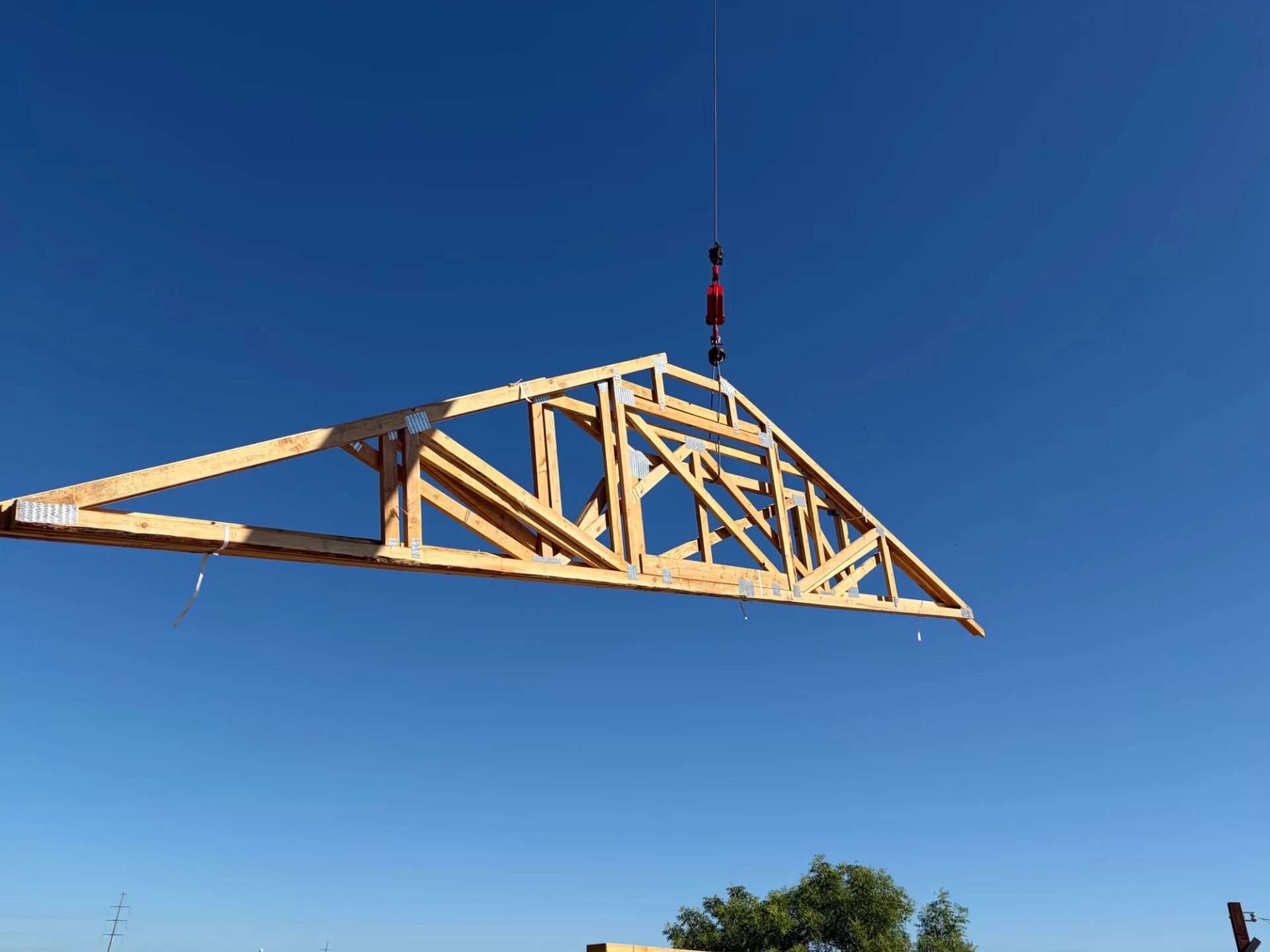
How to Choose a Roof Truss Supplier in Sacramento: A 2026 Builder’s Checklist
The right truss supplier keeps your framing crew moving. The wrong one costs you a week waiting on engineering, a late truck, or a quote that grew after you signed. Here’s the checklist we’d use to choose a roof truss supplier in Sacramento in 2026.
Key Takeaways
- Since January 1, 2026, new Sacramento-area permits fall under the 2025 California Building Standards Code. Your supplier’s truss engineering has to clear plan check under it (California Building Standards Commission).
- Ask for stamped truss design drawings and a placement plan before you sign, not after the trusses ship.
- Delivery and the crane set decide your framing schedule as much as the price does.
- A supplier that only builds and delivers trusses is a supplier. Anyone who installs them on your site needs a contractor license for jobs of $1,000 or more.
Why does your truss supplier matter so much?
In an industry side-by-side test, a component-framed house took 152 man-hours to frame, against 373.5 hours for the same house stick-framed (Pro Builder, on the SBCA framing study). Trusses are a big part of that saving. But you only get it if the package shows up right, on time, and ready to set.
A missing girder, a hanger schedule nobody sent, or a layout that doesn’t match the walls can stop a framing crew for days. So can a truck that arrives before the top plates are on. Picking a supplier is really picking who controls a week of your schedule.
Here’s what to check, in the order we’d check it if we were the builder. We’ve built roof and floor trusses in North Highlands since 1974, and this is the list we’d hand a friend. For the basics of truss shapes first, see our guide to types of roof trusses.
1. Will the supplier’s engineering clear plan check?
California’s residential code requires trusses to be designed to ANSI/TPI 1. The truss design drawings go to the building official before installation, and they ship with the trusses to the job site (STRUCTURE magazine). If the engineering isn’t right, nothing else about the supplier matters.
Most Sacramento-area departments handle trusses as a deferred submittal. Rancho Cordova, for example, wants deferred items reviewed by the registered design professional in charge of the project before they come to the city (City of Rancho Cordova). Other California counties spell out that the calcs must be stamped by a California-licensed engineer (Permit Sonoma). Your department’s handout is the final word, so check it.
Before you commit, ask the supplier for:
- Individual truss design drawings for every truss, stamped by a California-licensed engineer.
- A truss placement plan (the layout) that matches your architectural plans.
- Girder and hanger schedules, with drag loads called out where the design needs them.
- A revision process. How fast do they turn around plan-check comments, and do revisions cost extra?
Drag loads are an easy place for a layout to go wrong. On a recent home addition in Carmichael, the new roof tied into the existing house, and the placement plan called for girders rated for 1,000 lb drag loads. On a single-story home in Martinez, the girders carried 2,500 lb. A good supplier puts those numbers on the layout, so your framer and inspector never have to guess.

2. Are they designing to the 2025 California code?
The 2025 California Building Standards Code took effect on January 1, 2026 (California Building Standards Commission). Local departments apply it by application date. El Dorado County, for example, applies the 2025 codes to applications filed on or after January 1, 2026 (El Dorado County).
That matters if your permit straddles the change. A job filed in late 2025 may still be reviewed under the 2022 code, while the house next door, filed in February, is under 2025. Ask your supplier which code edition the truss design uses, and make sure it matches your permit. It’s a two-minute question that can save a round of corrections.
3. Can they deliver, and set, on your schedule?
A truss package does nothing for you sitting in a yard, or sitting on the street because nobody can lift it. BCSI-2025, the industry’s handling and bracing guide, is the standard reference for how trusses should be received, stored and installed on site (STRUCTURE magazine). Your supplier should send its jobsite package with every delivery.
Ask these before you sign:
- What’s the production lead time, in writing, from approved drawings to delivery?
- Do they run their own boom trucks, or do you have to hire a crane?
- Can they set from the street? Tight infill lots need a truck on the road with traffic control.
- Who unloads, and where? BCSI guidance puts receiving and storage on the contractor and says to unload onto a smooth surface (BCSI-B1 summary). Check every truss for damage before it goes up.

Site access is where local experience shows. On Leigh Avenue in San Jose there was no room on the lot, so we ran a flatbed and a boom truck on the street with cones out. On a hillside home in the Evergreen foothills, the boom truck set up on the graded pad and flew every truss onto the second floor. Ask any supplier how they’d handle your site, and listen for a specific answer.

4. Is the quote itemized enough to compare?
Two truss quotes can look far apart and land at the same cost once hardware, delivery and revisions are counted. So which number are you actually comparing? Lump-sum quotes hide those differences. Ask every supplier to break the price into the same lines so you can compare them side by side. For typical pricing, see our Sacramento truss cost guide.
| Line on the quote | What to ask | Red flag |
|---|---|---|
| Trusses | Count and type of every truss, incl. girders and gable ends | One total with no truss count |
| Engineering | Stamped drawings and placement plan included? | Calcs only “after deposit” |
| Revisions | How many plan-check revisions are included? | Every change billed separately |
| Hardware | Hangers and connectors included, or listed separately? | Not mentioned at all |
| Delivery | Delivery window and site requirements | “Delivery included” with no date |
| Crane set | Boom truck included? Street set possible? | You find out on delivery day |
5. Does your truss supplier need a contractor license?
It depends on what they do on your site. In California, construction work of $1,000 or more, labor and materials together, requires a CSLB license. The threshold rose from $500 on January 1, 2025 (Contractors State License Board).
A manufacturer that designs, builds and delivers trusses is acting as a material supplier. Once a crew installs, braces or repairs trusses on your job, that’s contracting. If a supplier offers installation, look them up on the CSLB license check. It shows the license status, the bond and workers’ comp coverage.
6. Why does a local Sacramento supplier make a difference?
Trusses are big, heavy and awkward to haul, so distance shows up in your price and your schedule. A supplier in the valley can reach Elk Grove, Roseville, Folsom or the foothills the same morning. That means a tighter delivery window, and a truck that can come back if something on site isn’t ready.
Local suppliers also know the building departments. Sacramento, Elk Grove, Rancho Cordova, Placer and El Dorado counties each handle deferred truss submittals a little differently. A supplier who submits there every month knows what each one flags. You can see where we’ve delivered on our service areas page, or browse recent projects like this custom home in Elverta.

Red flags to watch for
- Stamped calcs are only available after you pay a deposit.
- The placement plan doesn’t match your architectural plans.
- “Delivery included,” but no delivery window and no answer about the crane.
- A lump-sum price with no truss count or hardware breakdown.
- No named person to call when the framer has a question on site.
- They offer installation, but you can’t find their license on the CSLB lookup.
How Walker handles a truss package
We keep it simple. Send us your plans, and our designers return a quote that lists every truss, the engineering and the delivery. Once you approve it, you get the stamped truss drawings and placement plan for plan check. Then we build the package in North Highlands, deliver it on our own boom trucks, and set it on your walls. See how our process works, or talk to us about truss design before your plans are final.
Ready to compare? Request a truss quote or call (916) 338-2121. Building something other than a house? We also build commercial trusses.
About Mike Walker Lumber Co Inc
Mike Walker Lumber Co Inc is a family-owned truss manufacturer at 6915 30th Street, North Highlands, CA, building roof and floor trusses since 1974. Call (916) 338-2121 or request a quote at walker-lumber.com/quote.
Frequently Asked Questions
01 Do I need stamped truss calculations for a building permit in Sacramento?
Usually, yes. California code requires truss design drawings to be approved by the building official before installation, and most Sacramento-area departments take them as a deferred submittal stamped by a California-licensed engineer. Your engineer of record often reviews them first. Check your department’s deferred submittal handout for the exact steps.
02 Does a truss supplier need a contractor license in California?
Not if it only designs, builds and delivers trusses; that’s supplying materials. If its crew installs, braces or repairs trusses on your site, it’s contracting, and work of $1,000 or more needs a CSLB license. You can check any license, bond and workers’ comp status on the CSLB website.
03 What should a roof truss quote include?
At minimum: the count and type of every truss, stamped engineering and a placement plan, how many plan-check revisions are included, hangers and hardware, the delivery window, and whether a boom truck set is included. If a quote is one lump sum, ask for those lines so you can compare suppliers fairly.
04 Which building code applies to my trusses in 2026?
The 2025 California Building Standards Code took effect January 1, 2026. Departments apply it by permit application date, so a job filed in late 2025 may still be reviewed under the 2022 code. Ask your truss supplier which edition the design uses and make sure it matches your permit.
05 Who is responsible for bracing trusses on the job site?
The contractor and installer handle receiving, storing, installing and temporary bracing, following the BCSI industry guide and the truss designer’s permanent bracing details. The supplier should send a jobsite package with each delivery. Report any damaged trusses before installation, and don’t cut or modify them without the designer’s approval.