
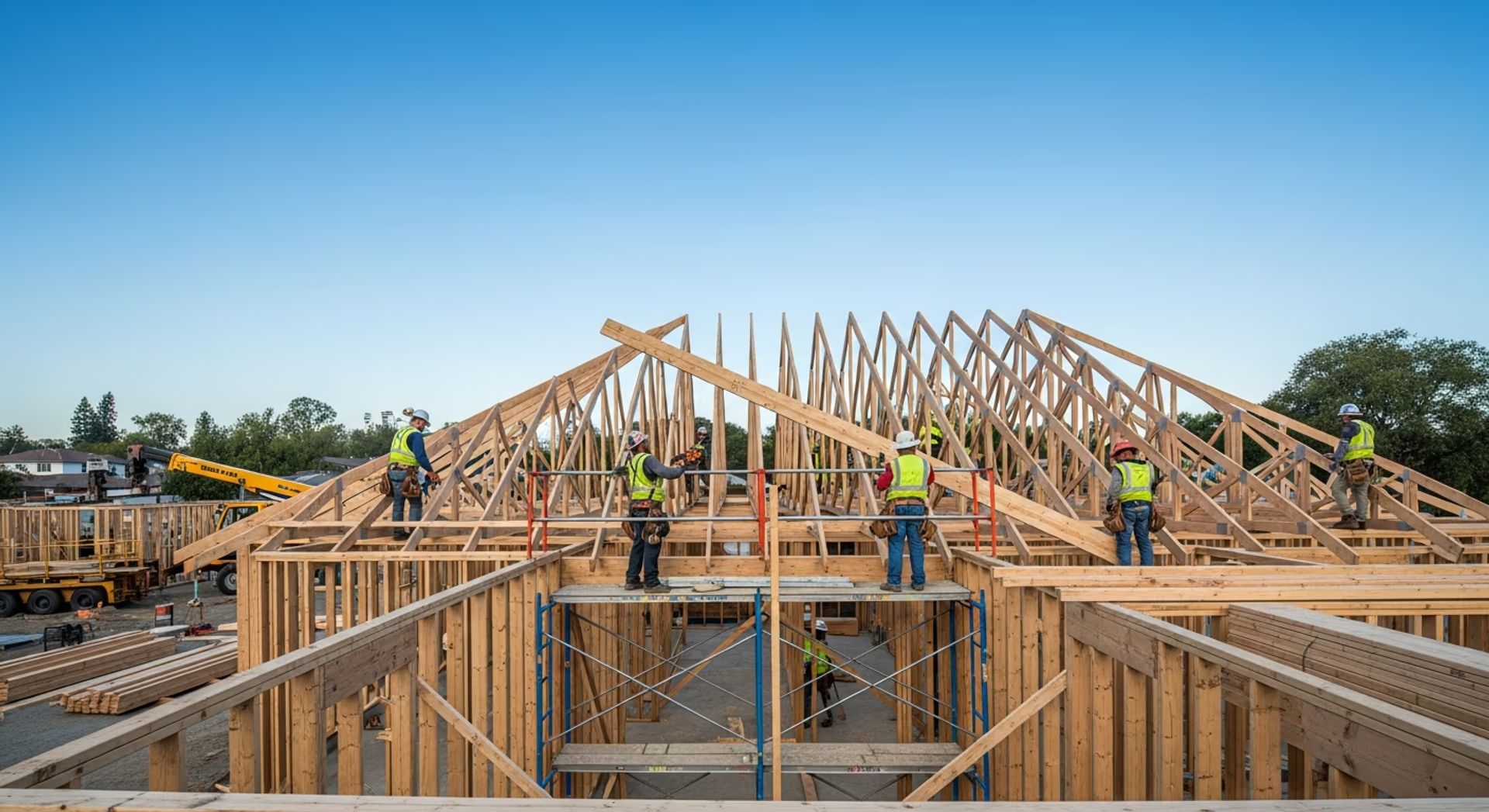
How Much Do Roof Trusses Cost in 2026? Sacramento Pricing Guide
What should you budget for roof trusses on a Sacramento project in 2026? Material costs, lumber market swings, and California's seismic codes all play a role. Here's what we've seen across thousands of projects, plus industry data to help you plan.
Key Takeaways
Roof truss materials cost custom per square foot pricing; installed cost runs custom per square foot pricing, 2026). Lumber futures hit current market rates in April 2026, up from significant cost in November 2025 (CME/Trading Economics). Key cost drivers: span length, roof pitch, truss complexity, lumber grade, and CA seismic requirements. Trusses use 25% less lumber than stick framing and generate 30x less jobsite waste (SBCA). Sacramento sits in Seismic Design Category D, requiring engineered connections that add to truss cost.
Key Takeaways
Roof truss materials run custom per square foot pricing. Installed with delivery, expect custom per square foot pricing(HomeGuide, 2026). Lumber futures are volatile: CME prices hit current market rates in April 2026 after dipping to lower market rates in late 2025 (Trading Economics). Sacramento's Seismic Design Category D rating adds engineering cost but keeps buildings safe. Trusses still beat stick framing on total project cost: they use 25% less lumber and cut framing labor by 60% (SBCA).
How Much Do Trusses Cost Per Square Foot in Sacramento?
Roof truss materials cost custom per square foot pricing, according to HomeGuide and Angi cost data. Add delivery and installation, and the all-in cost rises to custom per square foot pricing. For a 2,000 sq ft home, that's roughly custom pricing for the complete truss package.
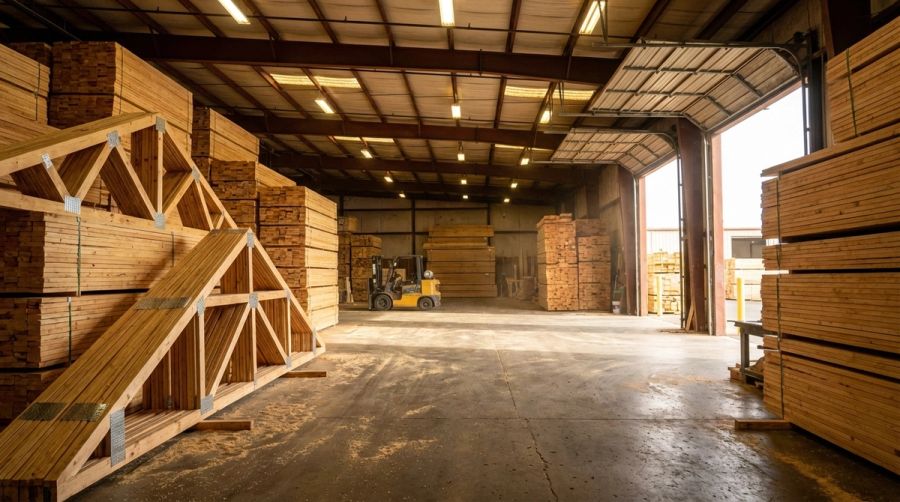
Where you land in that range depends on a handful of things. Simple gable roofs with 24–30 foot spans sit at the low end. Hip roofs, vaulted ceilings, and spans beyond 40 feet push costs higher. We'll break down each factor below.
One thing worth noting: these numbers move with the lumber market. A quote from January might look different by June. Always get a current estimate when you're ready to order.
We've seen this firsthand. In Q4 2025, a builder locked in a quote for a 48-unit townhome project at custom per square foot pricing. By the time he came back three months later, lumber had climbed 18% and the same package priced at custom pricing. The lesson from 10,154+ projects: quote when you're ready to buy, not six months early.
What Drives Truss Pricing Up or Down?
The SBCA's Framing the American Dream study found that component-framed homes use 25% less lumber than stick-framed homes: 15,052 board feet vs 20,643 (SBCA, 2015). That efficiency matters because lumber is the biggest variable in truss cost. Here are the factors that move your price:
Span and Pitch
Longer spans need bigger chords and more web members. A truss spanning 40 feet costs considerably more than one spanning 20 feet, simply because it requires heavier lumber and more connection plates. Steeper pitches mean taller trusses and more material. A 12/12 pitch will cost more than a 4/12 for the same span.
Design Complexity
Standard Fink (W-pattern) trusses are the most economical. Scissor trusses for vaulted ceilings, attic trusses with usable interior space, or girder trusses that support other trusses all require more engineering and heavier lumber. Custom hip-and-valley systems add even more complexity. How much more? It depends on the specific design, but expect 20–40% above standard truss pricing for complex configurations.
Lumber Market Conditions
Lumber prices have been volatile since 2020. CME lumber futures sat at significant cost per thousand board feet in November 2025, then climbed to significant cost by April 2026 (Trading Economics). That's a 24% swing in five months. Higher lumber costs flow directly into truss pricing since wood is the primary raw material. The grade matters too: MSR (machine stress-rated) lumber costs more than standard #2 & Better, but engineering specs dictate what's required.
California Seismic and Load Requirements
Sacramento falls in Seismic Design Category D under the California Building Code. That means every truss must be engineered to handle lateral earthquake forces, with specific hardware connections and bracing details. This adds engineering cost compared to states with lower seismic requirements. Wind loads, snow loads (especially for Tahoe and foothill projects), and dead/live load calculations all factor into the final engineering and price.
Quantity and Delivery Distance
Ordering more trusses for a single project lowers the per-unit cost. Production builders get better pricing than one-off custom home orders. Delivery distance from the manufacturing plant also matters. Sites within 50 miles of North Highlands are straightforward. Longer hauls to the Bay Area, Reno, or Red Bluff add transport cost.
From what we've seen running deliveries out of North Highlands for 50+ years, most Sacramento County jobs add minimal delivery cost. Bay Area runs to Walnut Creek or San Jose add more, and Tahoe/Truckee deliveries in winter can require special scheduling around weather windows. We factor all of this into your quote upfront so there aren't surprises.
How Does Residential Truss Pricing Compare to Commercial?
About 71.8% of new single-family homes in the US use prefabricated trusses, according to a Home Innovation Research Labs survey cited by the SBCA. Residential and commercial trusses share the same engineering principles, but they differ in scale and cost:
Residential trusses typically span 20–60 feet, use standard wood species, and cost custom per square foot pricing. Most single-family homes, ADUs, and smaller multi-family buildings fall here.
Commercial trusses handle larger spans (sometimes up to 70 feet), heavier rooftop loads like HVAC units, and more complex structural requirements. They use larger dimension lumber and specialized connections. Per-square-foot material costs run higher as a result.
Multi-family projects sit somewhere between. Individual units resemble residential construction, but fire-rating requirements, scale, and complex rooflines push pricing toward the upper residential range or into commercial territory.
One thing we've noticed across our multi-family projects: developers often underestimate the engineering complexity of fire-rated floor/ceiling assemblies between units. Getting the truss manufacturer involved early, during design rather than after permit submission, typically saves two to three rounds of revision and keeps the project on schedule.
Truss Cost by Project Type
Here's a quick reference for how pricing typically breaks down by project type in the Sacramento area:
Residential gable roofs: custom per square foot pricing, 20-40 ft spans, standard engineering. Residential hip or complex: custom per square foot pricing, 30-60 ft spans, moderate complexity. ADU and backyard homes: custom pricing-custom pricing, 15-30 ft spans, standard engineering. Multi-family: custom per square foot pricing, 20-50 ft spans, moderate to high complexity due to fire ratings. Commercial: custom pricing-custom pricing+/sq ft, 40-70 ft spans, high engineering complexity. Prices reflect 2026 Sacramento-area estimates for materials and delivery (HomeGuide, Angi, 2026). Installation labor is additional.
Are Trusses Cheaper Than Stick Framing?
Yes, for most projects. The SBCA's study measured the difference directly: framing a home with trusses took 152 man-hours vs 375 man-hours for stick framing. That's a 60% labor reduction (SBCA Framing the American Dream). With California carpenters earning a median of competitive hourly rates (BLS, 2024), those saved hours add up fast.
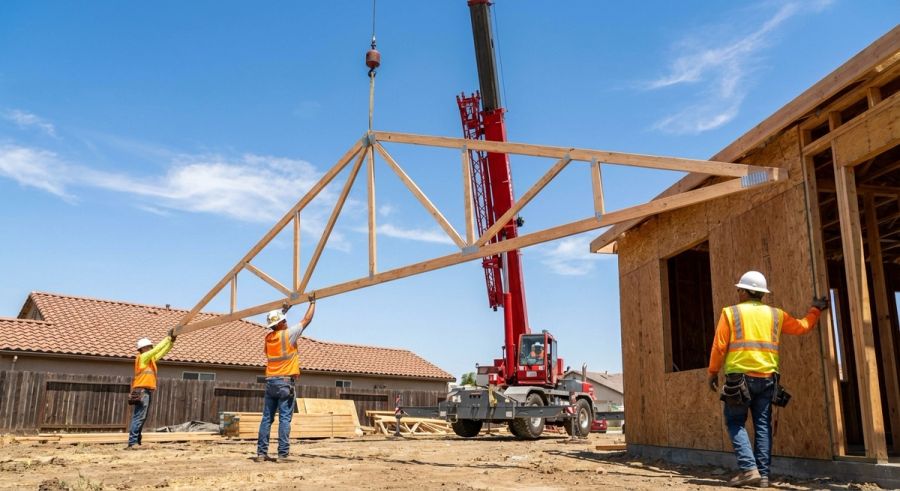
Material waste tells a similar story. Stick framing generated 15 cubic yards of jobsite waste compared to 0.5 cubic yards for component framing in the same study. That's 30 times more waste. You pay for that lumber, then you pay again to haul it away.
Factory trusses also arrive with consistent dimensions, no warping, no crowning decisions for the framer to make. Fewer callbacks, fewer rework hours. For a deeper comparison, see our full guide on trusses vs rafters.
How Do You Get an Accurate Truss Quote?
The more detail you provide upfront, the tighter your quote will be. Here's what a truss manufacturer needs to price your project accurately:
Complete architectural plans showing roof plan, floor plan, elevations, and any special framing details. PDF or DWG files work best. The exact project address, which determines seismic zone, wind exposure, and delivery logistics. Your construction timeline, so manufacturing and delivery can be scheduled to match. Any special requirements like fire-rated assemblies, specific lumber grades, or unusual loading conditions.
With that information, the engineering team can design the optimal truss system and generate a detailed quote. Most manufacturers, including our team at Mike Walker Lumber Co Inc, provide free, no-obligation estimates. Submit your plans through our contact page or call (916) 338-2121.


About Mike Walker Lumber Co Inc
Mike Walker Lumber Co Inc is a family-owned truss manufacturer in North Highlands, CA, serving builders across Northern California since 1974. Contact (916) 338-2121 or walkerlumber.com for a free estimate.
Frequently Asked Questions
01 Are roof trusses cheaper than stick framing in Sacramento?
In most cases, yes. The SBCA found trusses cut framing labor by 60% (152 vs 375 man-hours) and generate 30x less jobsite waste. With California carpenter wages at competitive hourly rates median (BLS, 2024), the labor savings alone often make trusses the more cost-effective option.
02 How long does it take to get custom trusses manufactured?
Lead times depend on production volume, project complexity, and lumber availability. Plan to submit your architectural plans early in the design phase. Engineering approval typically takes 3–5 business days, then fabrication is scheduled based on current capacity.
03 Do truss prices include installation?
No. Truss quotes from manufacturers cover engineering, fabrication, and delivery to your job site. Installation is a separate cost handled by your framing contractor. Installed truss costs run custom per square foot pricing, 2026).
04 What information do I need for a truss quote?
Complete architectural plans (roof plan, elevations, floor plan), project address (for seismic zone and delivery), construction timeline, and any special requirements like fire ratings or unusual loads. PDF or DWG files work best.
05 Why are Sacramento truss costs affected by seismic codes?
Sacramento is in Seismic Design Category D under the California Building Code. Trusses must be engineered with specific lateral-force connections, bracing, and sometimes heavier lumber to resist earthquake forces. This adds engineering complexity compared to lower-seismic regions.